FC—08PERSONAL AVIATION
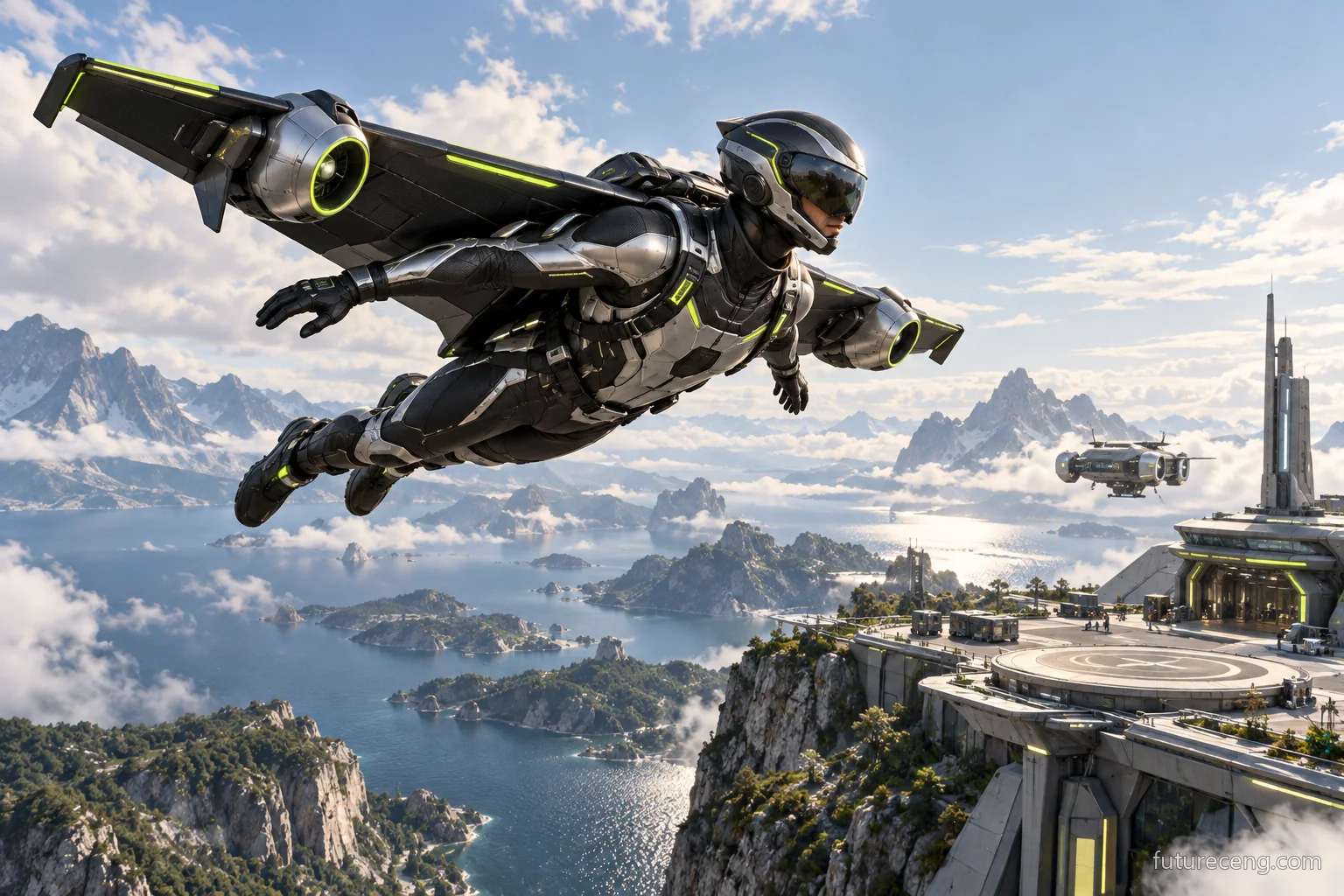
WingSu FlyCore
Where the road ends, another route begins.
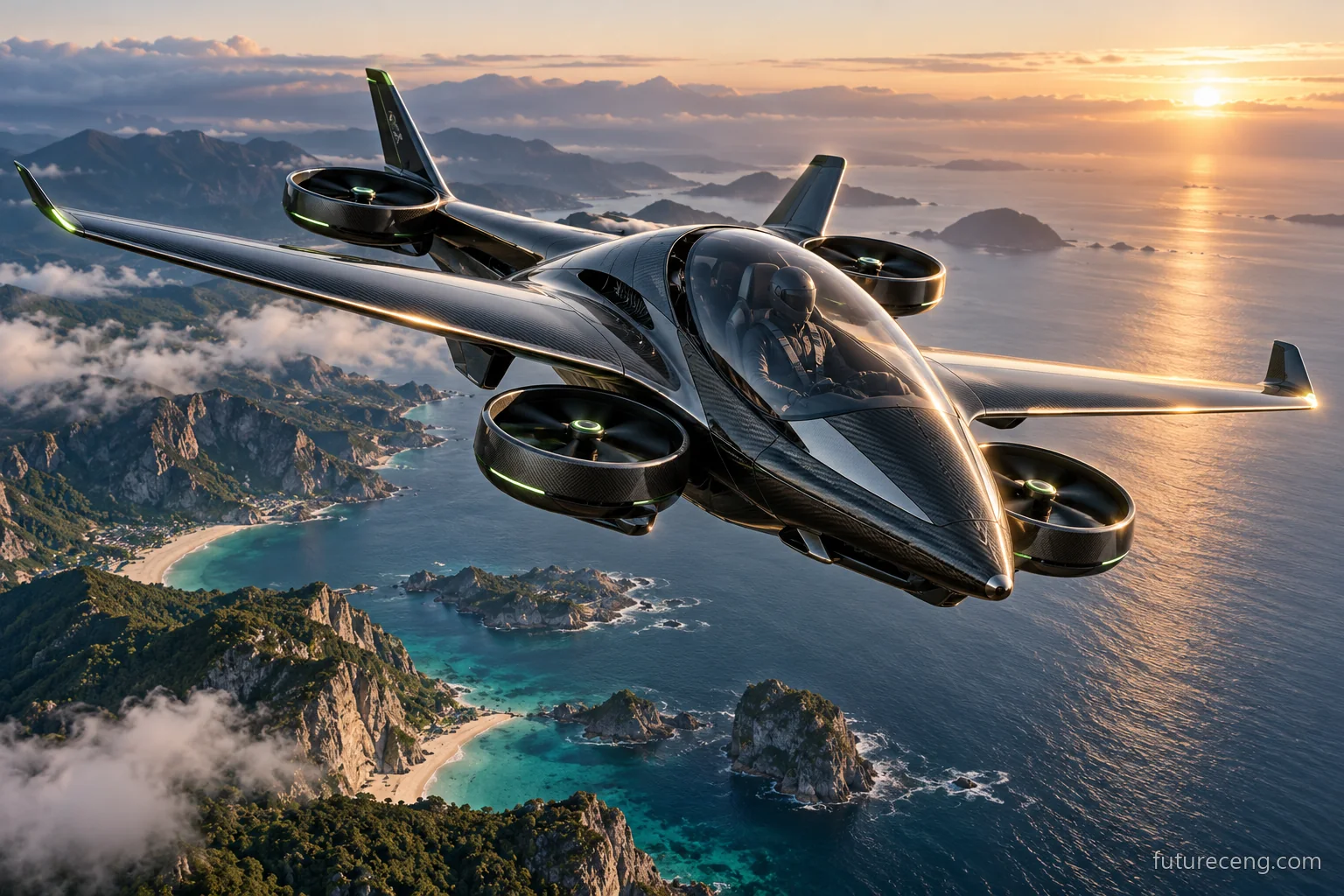
WINGED HYBRID PERSONAL AVIATION
Reimagine the sky as a route.
You lift off from a designated departure point. As the vehicle moves forward, its wings take a greater role. WingSu FlyCore considers the experience of the journey alongside its destination.
WingSu FlyCore, with the idea of vertical take-off, a vision of a hybrid winged flight in a personal jet. The imagined vehicle can withstand a hybrid arrangement that explores energy use in winged forward flight after takeoff. The appeal here is not just to get away from traffic, but to think of new connections between points that seem to be disconnected on today's traffic map. The first question of design is which trip should really be done better.
When you look at personal aviation, you have to design what happens before takeoff and after landing, right up to the moment of flight. Pilot readiness, energy status, weather conditions, suitable spots and maintenance are all parts of the same product experience. The user's relationship with the device will require more information than pressing a button. Therefore, pilot training and the necessary skills are not details to be added in the future; they are the basic conditions that the concept must take into account from the outset.
We don't present the idea of "where you want to be in an hour" in the first narrative as a validated date or time. This phrase expresses a desire for more direct transportation. WingSu FlyCore is not yet a ready-to-fly product; it is the field of research into energy, carrying capacity, and flight mode for a particular mission. First, choosing a meaningful route, minimizing the questions with simulation, and doing large-scale work with the expert aviation team can concretise the vision.
Which journey should we improve before designing a new aircraft?
It may not just be the type of engine or the body that makes the difference. The user's understanding of flight preparation, monitoring of maintenance, and planning the chosen route from start to finish can open up a strong product area. Design decisions are more consistent if energy and use are considered together. The idea of making the sky part of daily transportation requires first solving all the details of a particular journey.
THINK OF IT AS A SYSTEM.
Four parts.
One connected experience.
Define the task
Start and end points, transportation needs and expected use conditions are determined. Instead of describing a vehicle that can go anywhere, an open-ended task makes the design comparable.
Modeling the energy
Rise, pass, forward flight and landing are studied as separate stages. The role of electrical and other power components is assessed within the same energy budget, keeping assumptions visible. Assumptions are recorded in a visual form.
Testing in virtual environment before flight
The wing and thrust order can be compared to different task conditions in simulations. The goal is to figure out what points design needs more research on before producing an impressive animation. The results will determine the next questions.
Scale with experts
Inhuman-scale studies, maintenance approaches, and pilot experience can be considered together. The physical prototype phase should be carried out with aeronautical expertise; visual concepts should not be considered evidence of actual performance or flight suitability.
 CONCEPT IMAGE
THINK ABOUT THE FUTURE DIFFERENTLY.Before you go to heaven, ask the right questions.
POSSIBLE EVERYDAY SCENARIOS
Technology matters
when it touches lives.
Let’s look at the intended experience through everyday life.
Two fixed points
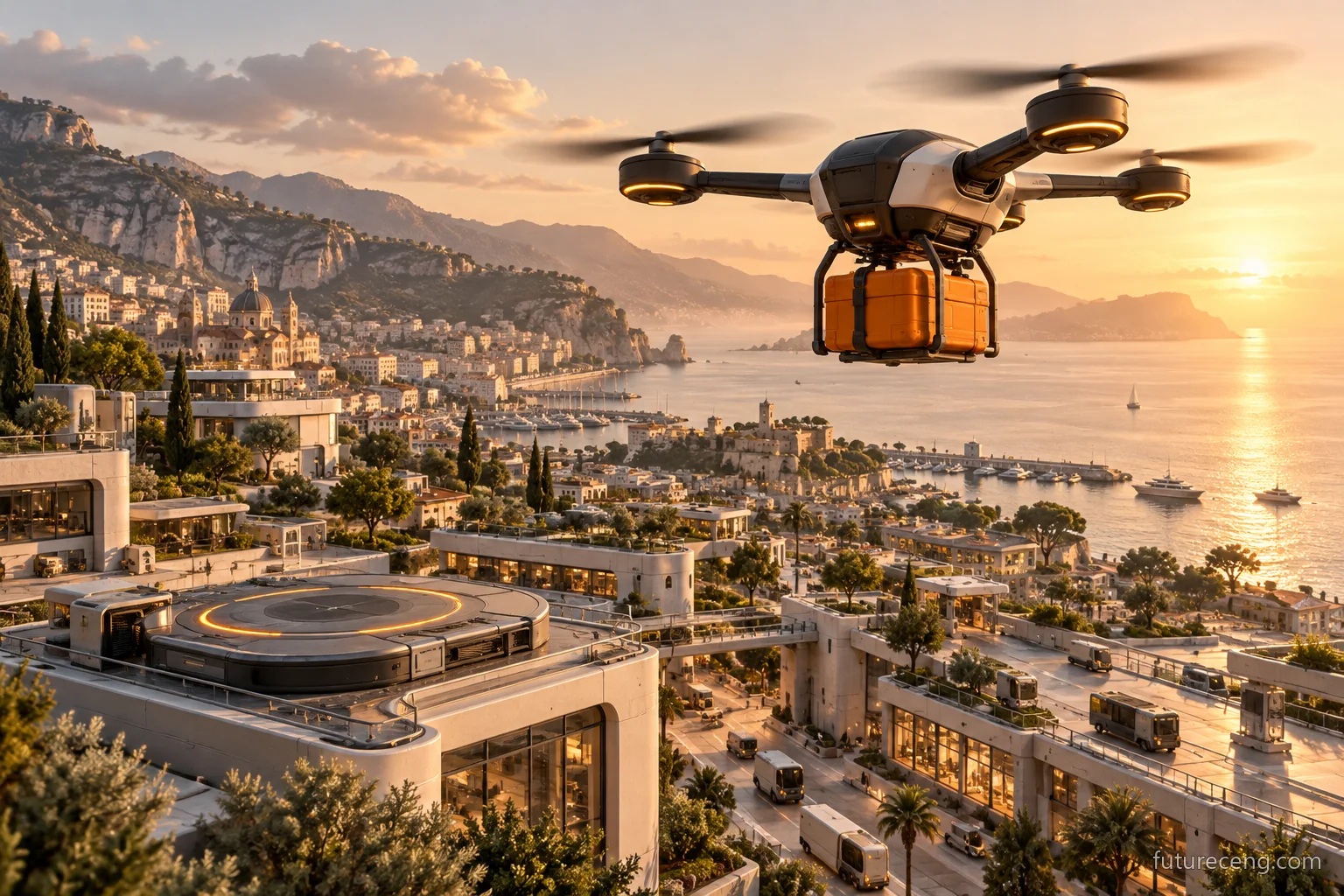
The mission focuses on a specific journey between two suitable takeoff and landing points. The design is evaluated by the requirements of the task rather than reaching everywhere on the map. The requirements of each stage remain clearly visible.
Preparation screen of the pilot
The planned interface can bring together energy status, maintenance information, and task steps in a comprehensible way. The user can distinguish which information is verified and which is a planning assumption. I won't move on to the next step until the preparation is complete.
Earth team day
Conceptually, after-flight control and readiness are part of the journey. Whether a vehicle is ready to return to service is not merely reduced to a battery charging indicator. Who's in charge of the care and the records will be determined.
How to change your name / WingSu FlyCore
Today's experience,
What's tomorrow's business?
What tasks can the experience in this work accomplish with new tools?
Behind-the-fly care, training and ground services can be reshaped.
WingSu FlyCore's vision is not only a new pilot experience, it's also raising new questions for ground crews. Combining flight preparation files, collecting maintenance history from different records, and classifying similar simulation results could become more automated. In turn, it maintains the importance of evaluating what the data says, communicating openly with the user, and understanding how a design change affects everyday use. The coordination knowledge of an aviation operations employee, the trainer's observation skills and the technician's registration discipline can be assessed in different assignments. The transition to another sector is not just about the similarity of vehicles; aviation-specific training and skills must be part of it.
It can combine readiness, maintenance status information and user communication in the same task stream. It tracks which team will complete the missing record and makes sure the change of plan reaches the people concerned. Existing coordination and documentation skills are maintained and can be adapted to smaller-scale personal aviation operations with training to recognise the new vehicle class and mission boundaries.
It shall monitor maintenance records and technical reports of new power systems within its appropriate training and jurisdiction. He openly reports repeated problems to the relevant engineering team. The discipline of recording and the practice of technical evaluation expands with the new architecture; the expertise required for the task is completed separately, without the experience gained on another device being considered sufficient on its own.
In the research simulation, it observes how users interpret preparedness information and interface notifications. It records repeated confusions, shares them with designers, and re-evaluates the change. The ability to teach and monitor human performance is used in conjunction with simulation data; the goal is not just to create a good virtual image, but an understandable experience that experts can evaluate.
Where's the new business idea? Simulation evaluation, technical documentation, maintenance data editing and user training are the service areas that can be explored around this vision. The first customer discovery can begin by understanding what information the design team needs to make decisions. A small team of experts could develop work that could contribute to a specific research need without producing the entire aircraft.
- Manually combine similar flight preparation records
- Compile maintenance status from different files
- Classify the results of the simulation repeatedly
- Hybrid aircraft system technician
- Personal aviation ground operations coordinator
- Flight simulation assessor
- A specialist in aviation maintenance
- Pilot Interface Experiment Designer
- Aviation systems and mission boundaries
- Interpreting the results of the simulation
- Maintenance documentation and human factors
Pilot, flight suitability and maintenance responsibilities shall be met with the necessary training, competence and authorisation.
Read this transition and other projects in AI 4.0EVIDENCE ALONGSIDE THE VISION
Around the world today
how far have we come?
Jetson ONE is a personal electric flight example; the manufacturer specifies a flight time of about 20 minutes. Horizon Cavorite is working on a winged hybrid vertical takeoff architecture.
Personal flight samples don't verify the transportation service that takes everyone to where they want to go in an hour. Range, payload, weather conditions and route requirements must be determined first.
PRIMARY SOURCES · LAST CHECKED 26 OCTOBER 2026
A BIG VISION. A MEASURABLE FIRST STEP.
What could we
try first?
Create an energy budget and flight simulation for a single transportation mission. With an expert aviation team, move on to a prototype on an unmanned scale.
A FEW MORE GOOD QUESTIONS
Questions worth asking.
Is WingSu FlyCore an operational aircraft?
No, I'm not. It's a visual and editorially developed concept of aerial vehicles. The engine, wings, power system and flight performance are not complete product features. The next concrete work could be to create a simulation for the energy budget for a specific task and for experts to evaluate. The results can determine the direction of the design.
Is it really possible to get everywhere in an hour?
This is not a confirmed product promise. Travel time shall be assessed in conjunction with route, weather conditions, transport capacity, energy and operating conditions. The vision is to be able to make some connections more direct, and the studies need to show how much benefit can be generated. The assumptions should be kept visible in the travel model.
Why are both wing and hybrid powers considered?
This concept wants to explore the needs of different flight phases together. The fact that winged forward flight and vertical takeoff meet in the same design raises important engineering questions. It should also be assessed not by the assumption that the hybrid arrangement is suitable, but by the function defined and the comparative energy model. The results of different architectures should be compared together.