FC—07SAFETY OF LIFE IN THE WATER
Safe Healthy Control
Let technology strengthen confidence in the water.
WATER SAFETY AND RESCUE SUPPORT
A voice in the water: I’m here.
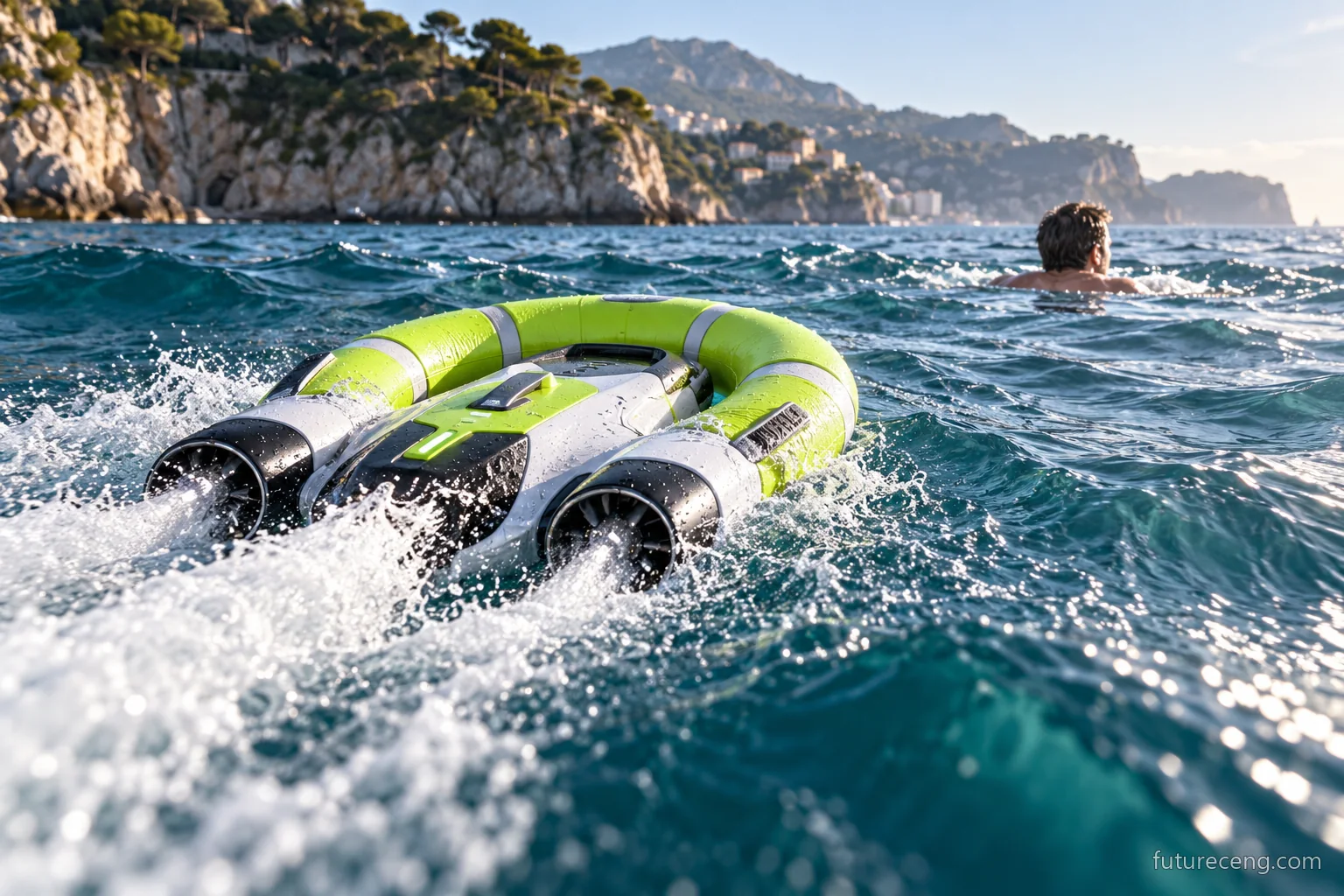
Someone struggles at the surface. A lifeguard’s alert sounds. Approaching flotation support offers a short, clear message: “Hold on to me.”
Safe Healthy Control, the idea of rethinking the experience between detecting danger in the water and getting help. Observation, alarm, float support, and communication can be interconnected in a pool, shore, or controlled water area. The purpose of this system is not just to produce a moving light bulb, but to address the questions of who is aware of the danger, who is managing the support, and how the person can get help.
The most humane part of this vision is sound. Understanding what an approaching device will do at the moment of danger can be just as important as the device itself. Brief, understandable, and contextually relevant instructions can be used to indicate where the person can be held or to convey the employee's communication. The thought of "Don't worry, I'm protecting you" comes from this feeling of closeness. The language of the product must be calm; it must not provide unconfirmed assurances about the exact outcome of the rescue.
Supporting a conscious person on the surface, finding a person who's lost underwater, and recovering an unconscious person are separate technical tasks. Small oxygen tubes, automatic swelling, or life-saving modules are also considered separate research topics. Combining an alarm and remote-controlled floating support with officer surveillance in a controlled pool for initial operation may provide a more understandable limitation. The rescue team needs to see the process every step of the way.
What if help could explain itself clearly as well as being visible?
The area that can be explored in water safety could be where teams can better manage the same event before a single device can take over the entire task. The location marked in the image, the alert reaching the officer, and the person-to-person navigation support can be linked to a shared event record. So the technology reinforces human surveillance. Learning how different users understand directions can be as crucial an improvement as mechanical design.
THINK OF IT AS A SYSTEM.
Four parts.
One connected experience.
Make the status visible
The surveillance system in the control area can alert the officer to suspicious situations. A software estimate is not considered a completed recovery decision; it manages the next step by evaluating the location of the event and the current image.
Routing the support
The designated floating vehicle shall proceed to the point designated by the operator. Approach form, holding area, and whether the employee can stop the device are among the key issues to be assessed by actual usage experiments.
Communicate clearly
A voice interface can provide a person with short, actionable instructions. The language integrated with the live communication of the mission must also be tested, taking into account the noise of the environment and the individual's different understanding needs.
Transfer to the team
The support vehicle is designed as part of a professional rescue process. The event record, the condition of the equipment and equipment used remain visible, and maintenance and re-preparation are included in the completion of the task.
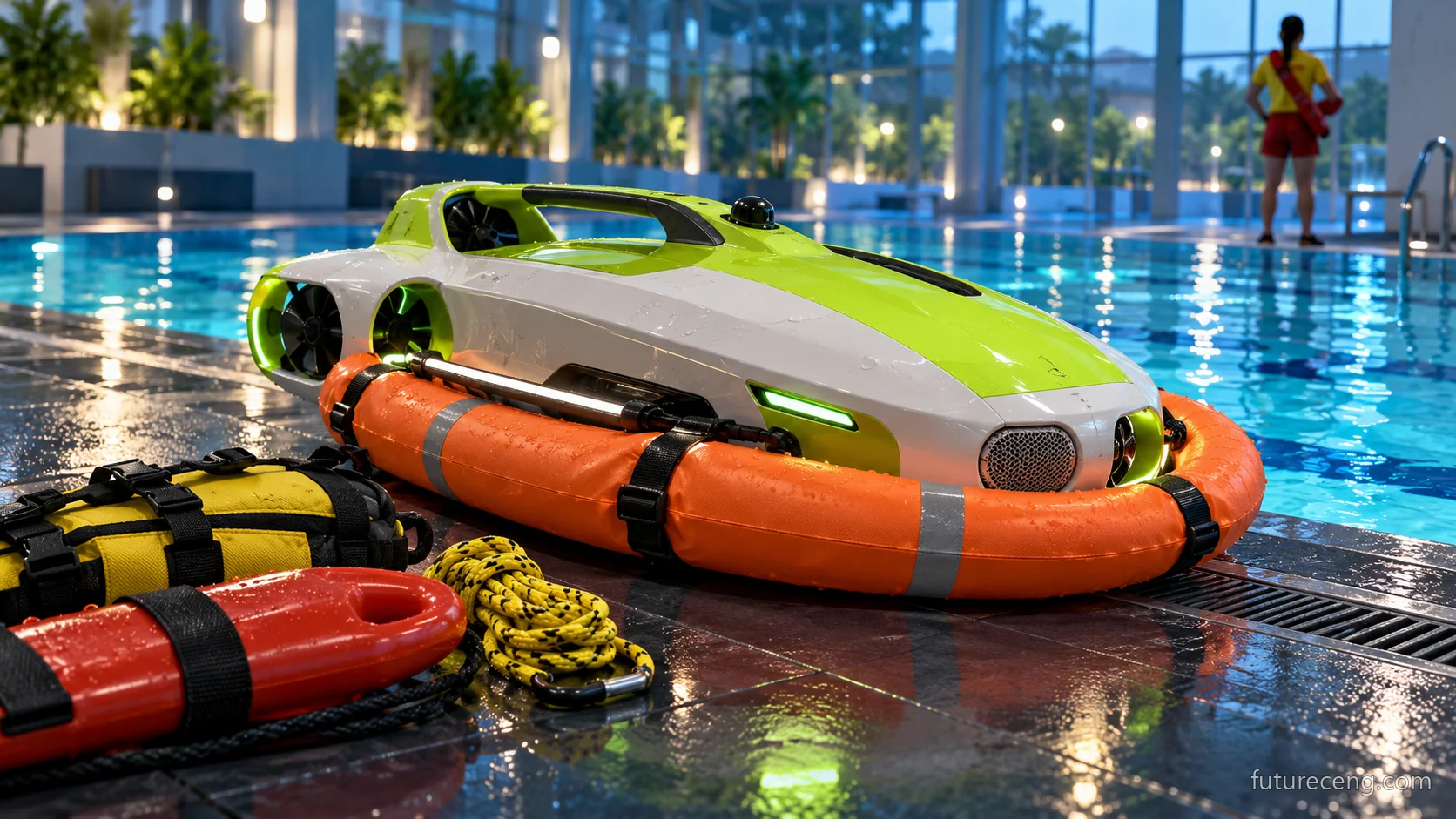 CONCEPT IMAGE
THINK ABOUT THE FUTURE DIFFERENTLY.“Don’t worry. I’m here to protect you.”
POSSIBLE EVERYDAY SCENARIOS
Technology matters
when it touches lives.
Let’s look at the intended experience through everyday life.
Controlled pool
In the first attempt, the officer evaluates the marked point and directs the floating vehicle. The scenario can focus on examining the understanding of the alarm and the remote control experience with models. The first area of learning is team coordination.
A support point on the shore
In a planned use, the team will be able to see the device ready on the common screen. Situations where water conditions are not available are also included in the status information; the limit of the device is not hidden from the operator. The decision to continue the mission rests with the competent team.
Different users, open communication
Sound, color, and grip signals can be designed together. The goal is to make it easier for the first person to see the device to understand where to hold it without reading a lengthy explanation. Signs can be tested with users.
How to change your name / Safe Healthy Control
Today's experience,
What's tomorrow's business?
What tasks can the experience in this work accomplish with new tools?
To support the rescue team's observation with a tech team ready.
In the Safe Healthy Control vision, the lifeguard, facility operations officer, and maintenance technician can relate their work to new vehicles. Writing the equipment status on paper, converting the event record to different forms, and re-checking if the device is ready can be partially automated. The evaluation of a trained water and environmental worker is central to the task. Those who understand the difference between a device appearing ready on the screen and available in the field can gain weight. The new roles may include operators who recognize remote navigation support, technicians who monitor equipment, and instructors who evaluate how well the device works with humans. Daily monitoring by a facility worker can also be a valuable resource for understanding the actual conditions of use of the product.
With additional equipment training to his current capabilities, he can add the status of the support vehicle to the task force. Evaluates the image presented by the system together with the event information, establishes coordination within its authority, and transfers observations to the product team. The ability to read the environment and communicate calmly remains in place, and the new role adds to this experiment the ability to understand the device interface and keep an open state record.
He keeps records of his authorized controls, maintenance plans, and cases where the device has fallen out of use. It compares the problems reported by the agents with the technical background and communicates with the relevant service. The habit of regular maintenance here moves into a new class of equipment; the day-to-day job is not only to repair the device, but to ensure that the team has an accurate understanding of the current condition of the device.
In a controlled training environment, it observes how the employee understands the device state and the audio interface. It reports mixed statements, vague work sharing and accessibility issues. The experience of training preparation and monitoring human behavior expands with the knowledge of evaluating new interfaces. The goal is not to create confidence in technology, but to make it clear to the staff that the vehicle can and cannot do it.
Where's the new business idea? As well as equipment support for facilities, training evaluation, maintenance coordination and event recording are services that can be investigated. An entrepreneur can first investigate what information the staff can't trust and what information is missing between teams. Opportunity may be developing an experience that allows people to better understand the same situation rather than generating more alarms.
- Keeping the equipment ready records manually
- Collect event information from different channels
- Repeating device status checks
- Water safety robot operator
- Rescue support system technician
- Swimming device maintenance specialist
- Human–Robot Rescue Experience Trainer
- Event recording quality manager
- Water safety and team coordination
- Device control and maintenance limits
- Open communication and event evaluation
Technology is assessed under the responsibility of a trained lifeguard; the change of assignment depends on the area of use and the proven capacity.
Read this transition and other projects in AI 4.0EVIDENCE ALONGSIDE THE VISION
Around the world today
how far have we come?
EMILY is an example of a remote-controlled motor rescue lamp used in field rescues. The U.S. Navy is deploying operations off the coast of Greece.
Reaching a person on the surface and finding an unconscious person underwater are different problems. The oxygen support, automatic inflation and underwater rescue components must also be verified.
PRIMARY SOURCES · LAST CHECKED 26 OCTOBER 2026
A BIG VISION. A MEASURABLE FIRST STEP.
What could we
try first?
First, try hazard detection, alarm, and remote-controlled navigation in a controlled pool under official control. Consider voice as a supportive interface.
A FEW MORE GOOD QUESTIONS
Questions worth asking.
Can Safe Healthy Control automatically rescue everyone?
There's no guarantee of that. It's a system concept to be explored. Relief on the surface, underwater search, and removing a person from the water are different tasks. The first applicable framework could be the simultaneous testing of officer-supervised alarm and float support in a controlled environment. Each task must be judged on its own terms.
Is a talking device really necessary?
The value of the voice interface should not be assumed; it should be researched with users. The idea is to be able to briefly explain what the approaching device works for and how to use it. Environmental noise, language, hearing differences and a person's condition should be evaluated along with visual and physical signs. It needs to be researched with real users where the referrals work.
Is the idea of saving aquatic life part of the same product?
It's part of the vision, but it shouldn't be considered the same job as a human rescue mission. Approaching, transporting, or guiding different creatures requires specialization and design. Developing a system that first understands the boundaries of a single task can provide a more robust foundation for further research. Different tasks are evaluated separately.