FC—03THE NEW GENERATION MMORPG
Reacher:Oblivion
This world’s ultimate opponent is learning.
A LIVING MMORPG UNIVERSE
This world keeps moving when you leave.
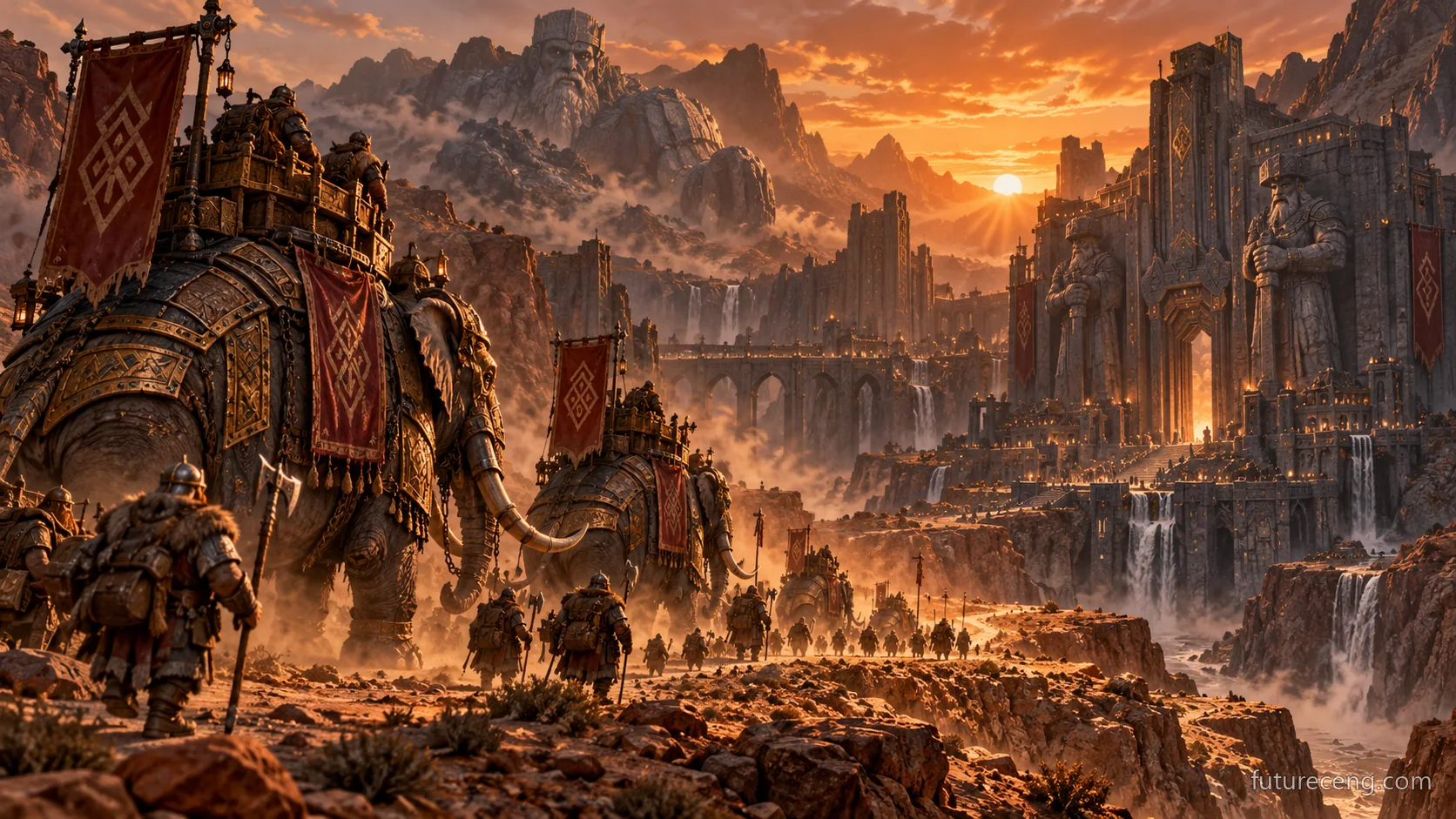
An elephant caravan appears in the distance. Castle gates close. As darkness falls, players realise that the approaching army has been learning by watching them.
Reacher:Oblivion; a vision of MMORPG where dwarves, giants, big caravans and constant competition meet in the same world. Knight is inspired by a sense of community in games like Knight Online and Silkroad, while seeking his own identity in a universe that connects his struggles with his economy. The caravan will be more than just a carrying event: it will be a factor that can change the power of a castle, the plan of a pot, and the next clash of the map.
In this world, we don't just think of AI as an enemy with more lives. In designed encounters, the opponent's behavior can be read, mistakes detected, and the player's response can be meaningful. The boundaries of the learning system must be part of the game design: an opponent with invisible knowledge, instead of arousing curiosity, violates justice. The player's goal should not be to break through a mathematical wall, but to solve the strategy in front of him.
At the end of the year, the idea of human actors uniting against an army of artificial intelligence is the great meeting point of this vision. Competing communities throughout the season may have to make a decision in the face of a common threat. Today, this universe is not presented as a complete game. First, we want to find the fun of being a caravan, fighting and being a team on a small map, and then we want to turn that core into a living world.
What if your greatest opponent understood your strategy as well as growing stronger?
The differentiation area of the game produces common stories to tell the players instead of increasing the number of separate events. A guarded caravan can hold the fort; a lost passage can change the next battle. So the content doesn't just consist of tasks written by the developer. The players' decisions are also incorporated into the universe's memory and provide a meaningful reason to return. A lasting sense of community can arise from these results.
THINK OF IT AS A SYSTEM.
Four parts.
One connected experience.
Join a world
Class, equipment, and community preferences make up the player's role. The first goal is to create a language of war that can be understood without the need for long explanations and class differences that make you feel what you're putting into your team.
Fight for a reason
Caravan roads and fortifications can be linked to the source stream. The conflict on the map isn't just about scoring points; players can see what changes the world where they protect or lose.
Solve the opponent's layout
Limited AI commanders may respond differently to specific strategies. The clue, counter-movement and learning space should remain open to the player; surprise encounters should not be confused with incomprehensible penalties. The retaliation area needs to be protected.
Change the fate of the season
The great common war can bring together the player's stories throughout the season on the same stage. Activities that carry traces of previous decisions should be designed in such a way that the new player can also play a meaningful role.
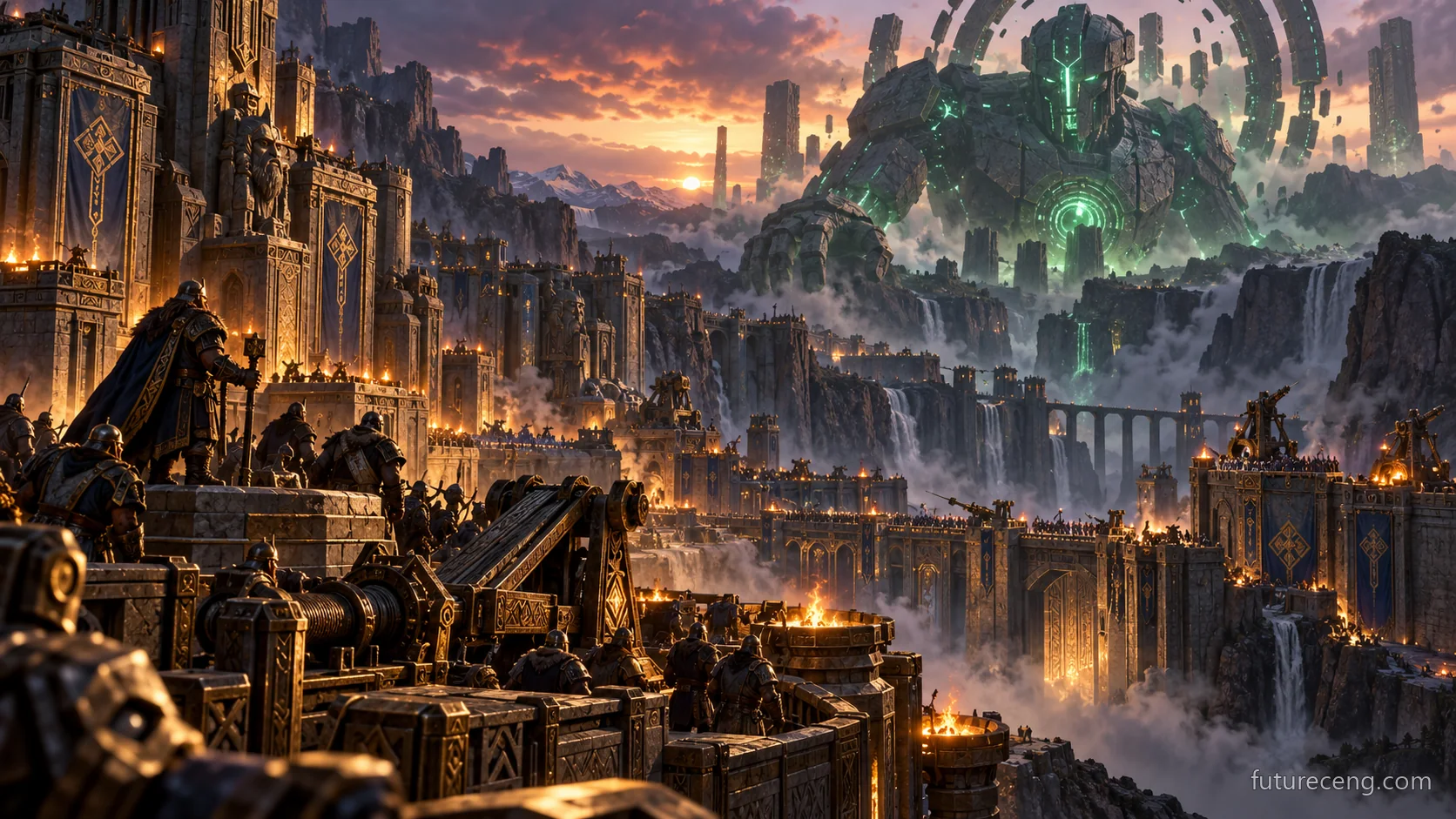 CONCEPT IMAGE
THINK ABOUT THE FUTURE DIFFERENTLY.A war that started with a caravan, spread across the world.
POSSIBLE EVERYDAY SCENARIOS
Technology matters
when it touches lives.
Let’s look at the intended experience through everyday life.
The last pass of the caravan
When a giant elephant caravan passes through the mountain path, its rivals close the gate. As much as the value of the item, it's important to keep your escort promise. So the struggle can become a shared memory.
The night before the siege
Players discuss which front of the castle to defend. Gathering resources at one door might work today; repeating the same pattern might get a different response tomorrow. The player's decisions can make their mark on the next game.
In the same line as the competition
In the imagined battle of the season finale, the former rivals will form a common front. In the face of the great enemy, who to trust creates a story as memorable as war. The gaming community can write their own history here.
How to change your name / Reacher:Oblivion
Today's experience,
What's tomorrow's business?
What tasks can the experience in this work accomplish with new tools?
From memorized enemies to teams evaluating living worlds.
In a game like Reacher:Oblivion, the job of task designer, game tester, community manager, and data analyst may be closer together. Manually replicating similar enemy movements, classifying daily events, and preparing repeat test reports can be automated. But it takes a human perspective to understand why a meeting feels unfair, why the caravan economy excludes the new player, or how an event creates a story in the community. It's also worth watching a support worker who listens to the player as much as the software's system knowledge. The transition may not be to give up creative work; it may be to learn to choose from the vast number of behaviors produced to serve the identity of the game and the justice of the player.
Instead of just checking to see if the character is stuck, they examine how the same encounter responds to different player decisions. It prepares repeatable error samples, records when the system behaves inconsistently, and provides an open report to the design team. Curiosity, patience, and the ability to see detail expand with the knowledge of AI comparing behavior and interpreting test data.
The player does not just divide his complaints into topics; he investigates why the game situation is perceived as unfair. It reviews game events together with supporting footage and delivers shared samples to designers. Hearing the player's sentence correctly remains the basic skill, which includes the habit of reading data, making impartial assessments, and comparing different levels of experience.
He monitors how caravans, resources, and fort activities interact with each other. It evaluates the change proposal not only by the total number of transactions, but by the experience of different groups of players. The ability to analyze and model combines with the ability to talk to the design team; the day-to-day work is more about figuring out what changes make the game more interesting than generating more data.
Where's the new business idea? Behavioral testing for independent teams, community research, accessible interface and live game economics assessment can create separate service areas. An event designer can also suggest experiences that support the story that communities produce together rather than just writing the task text. The first opportunity would be to find out which experiment in a small playable experiment made you want to play again, and show that with clear examples.
- Manually diversify repeated enemy behavior
- Classifying routine game events
- Preparing similar balance reports
- The game AI Behavior Designer
- A living analyst of the world economy
- Player Justice Assessment
- Community Activity Designer
- A game AI test expert
- Game systems and balancing
- Interpreting the player data
- Do not test AI behavior
Creative decisions and community management remain central to the player experience.
Read this transition and other projects in AI 4.0EVIDENCE ALONGSIDE THE VISION
Around the world today
how far have we come?
DeepMind AlphaStar has shown superior competitive performance in StarCraft II. Learning game AI is possible, but that success doesn't mean that a giant MMORPG that lives forever is ready.
The original opportunity is to link the caravan economy and the castle battles to an artificial intelligence invasion tailored to the players' strategy. Justice, delay and game cost are the basic limits of the experiment.
PRIMARY SOURCES · LAST CHECKED 26 OCTOBER 2026
A BIG VISION. A MEASURABLE FIRST STEP.
What could we
try first?
Start with one map, two character classes, one caravan and a test with 10–20 players. Use a bounded AI commander to find out whether the combat and economy are enjoyable.
A FEW MORE GOOD QUESTIONS
Questions worth asking.
Can Reacher:Oblivion be played now?
This page describes a game vision, not a completed or accessible MMORPG announcement. The first meaningful step, in a small playable experiment, is to see if the battle, the caravan system and the team decisions are fun. The great universe must be built on this core. The pleasure of playing must first be tested on a small scale.
Will the AI in the game win every fight?
The goal is not to inevitably defeat the player, but to create understandable but changing battles. The opponent's access to information, the limits of reaction, and the way he learns must serve the justice of the game. Players' ability to spot a mistake and develop a plan is a design measure more important than the power of artificial intelligence. The challenge must be designed with learning responses.
Will PvP keep everyone on the defensive all the time?
That's one of the basic design questions to be solved in the first prototype. The continuous competitive vision must take into account the areas where the new player can learn the world and the participation of communities at different rates. Purpose is not a tiring necessity, it's a struggle and a sense of meaningful risk that you want to return to. This balance should be determined by the experience of the players.