HEALTH & DESIGN5 MINUTES OF READING
Where does a person belong in the hospital of the future?
When do more sensors lead to better care? A human-centred look at healthcare technology through patient control, clinical decisions and clear information.
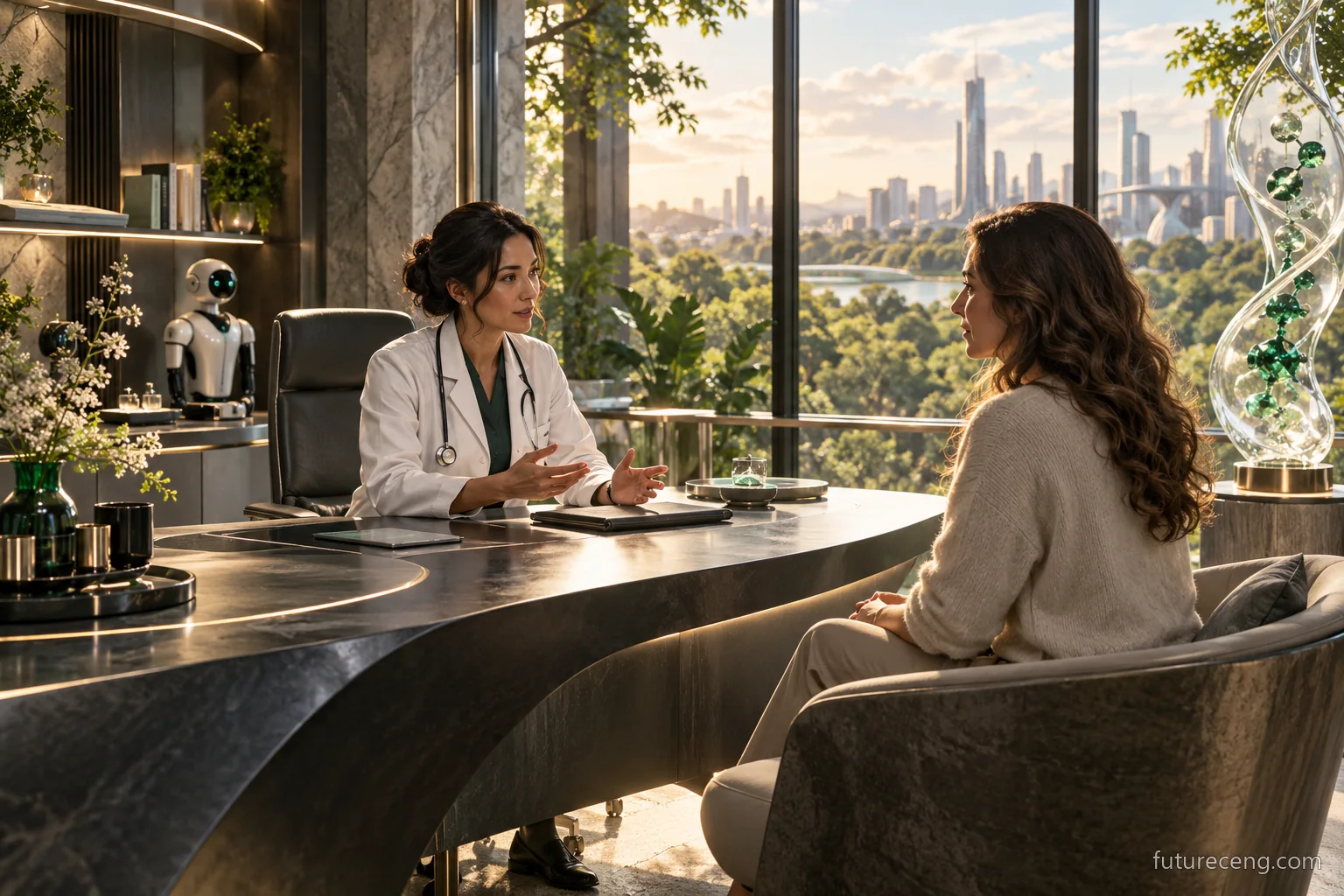
The first measure of the future may be what the patient is experiencing.
Sometimes, when we prepare for the exam, we repeat the same information to different people. A measurement might be on another screen, a previous note might be somewhere else. When we think about the future of mobile health support, we can look not only at its improved appearance, but also at how it will rebuild its broken experience.
In a hypothetical good experience, the patient knows what information has been received, can correct a misunderstood complaint, and can understand what will happen before the procedure begins. The ability of technology to explain itself is as much a part of design as the lights and screens around it. A calm atmosphere, an understandable order, and a sense of control are thought of together.
One automation is not a whole profession.
Aletta’s supervised robotic blood collection is a practical example of automating a narrowly defined clinical task. It does not mean that all patient care can be automated in the same way. Taking a measurement and interpreting it in the context of a patient’s symptoms and history carry different responsibilities.
We consider Nurse Robot to be a mobile system that meets the idea at the entrance, carries the appropriate patient sitting down, and provides information to the healthcare team. It can be a start to editing the patient's history, combining the available information, and presenting a readable summary to the expert. More advanced device functions require their own verification and development processes.
Instead of more data, just connect it.
It's easy to imagine a dress measuring all the time. The hard part is determining who should be aware of this information when. Repeated notifications may exhaust the patient; uncontextual numbers may not provide meaningful decision support to the care team. Design should be as much about interpretation as quantity.
The first step in ideas like follow-up clothing might be to select a specific user group and an open follow-up need. Seeing the data of existing appropriate sensors along with the person's notifications generates better research questions than an uncertain "measure everything" goal. This approach should be tested with clinical partners.
No user control, no feature added later.
The user should be able to see what data is being retained, with whom it is being shared, and how it can be corrected if necessary. The same principle applies to physical interaction: it's design questions to understand the robot's movements and to be able to stop the process if necessary. A vision of the future alone does not create confidence.
In the first prototype, we can observe the current flow of information instead of the new device. What's the patient saying again, what information is the staff looking for? A little bit of preparation for this need can show you where the big vision is going to start. The beauty of a hospital of the future is that the patient is understood and the employee has access to the right information.
Further reading
This post is an evaluation of the future and product design. The following resources are for the current studies and research discussed.