FC—10A BIOHYBRID FUTURE
Human × AI
A longer life. A better life.
LONGER HEALTH LIFESTYLE RESEARCH
More years, with a better quality of life.
The real question is about more than how long we live. How well can we live alongside the people we love, making our own choices and remaining active?
The Human + Artificial Intelligence vision asks how organ support, biological research and computing technologies can contribute to human life. The point of departure is not to put a person in a machine that's being replaced with parts. What does it mean to be able to move, communicate, and participate in daily life? When we evaluate the technologies of the future, we want to look not only at the number of years, but also at the quality of those years. This is where the human goal of research begins.
Studies of supporting organ function, understanding aging cells, and the nervous system span different fields of science. Artificial intelligence can be evaluated to organize complex information from these fields or to compare research questions. But the result that seems interesting in a computer model is not a cure that works directly in humans. In this project, we want to create a language of research that makes the progress of science visible, that doesn't confuse different types of evidence.
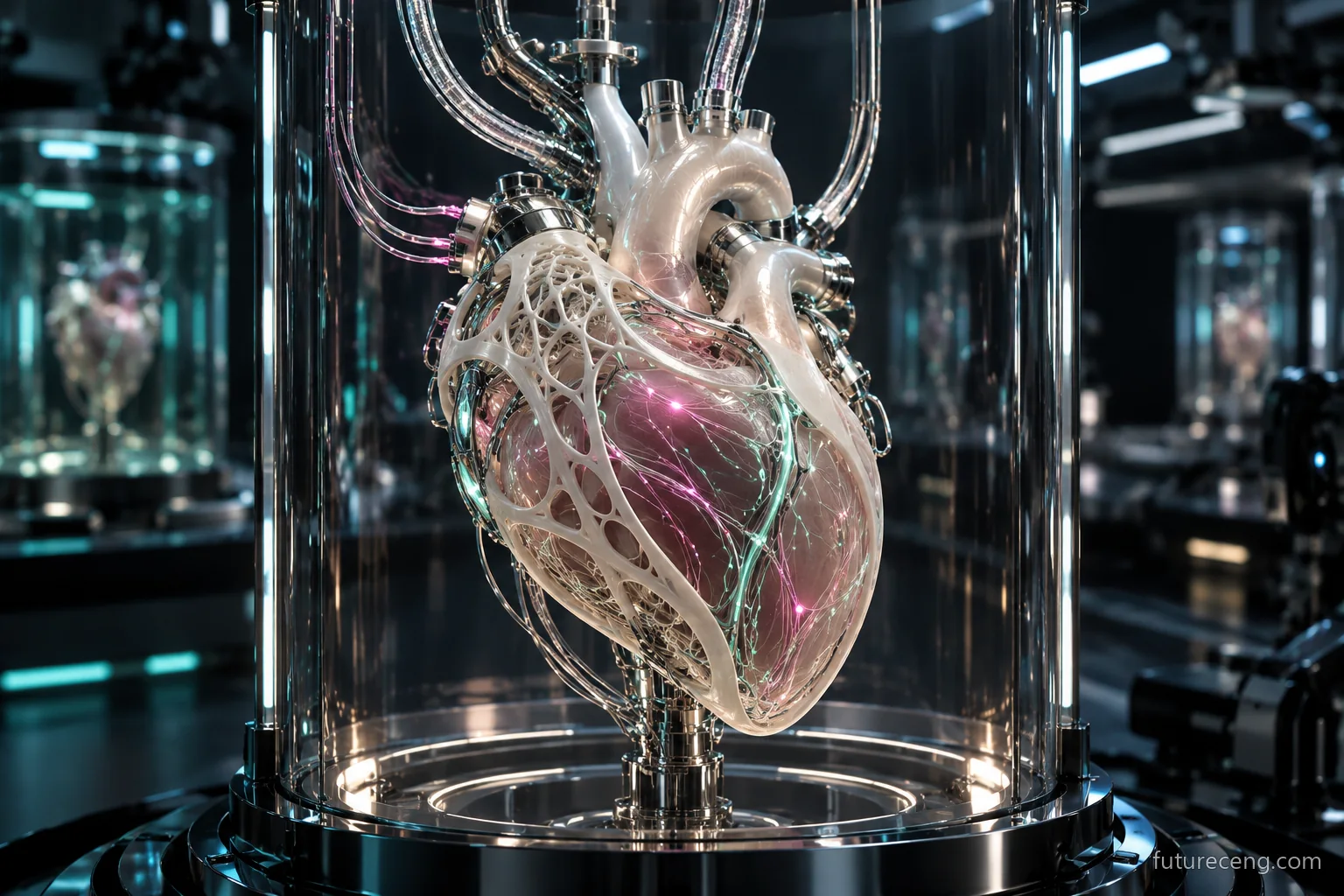
Immortal organs, the clearance of all DNA damage, or the complete prevention of neuron death are not proven promises of this project. These are big questions that show the limits of people's desire to live long. The tangible first product may be smaller: an information map that explains the purpose of the research, the method, the environment in which it is being studied, and the unanswered questions. So that both the curious reader and the expert who wants to contribute can understand where they stand on the same title.
Could the ambition to extend life go hand in hand with protecting its quality?
A strong start in this area may not be to generate a larger rejuvenation claim, but to build a tool that will help people better understand research. What result comes from just one model, which one is being studied under different circumstances, and what question remains open? Making these distinctions accessible can create a culture of research that holds hope and evidence together. The correction and contribution of specialists can nourish this culture.
THINK OF IT AS A SYSTEM.
Four parts.
One connected experience.
Set a goal for the person
The title of the study is transformed into an open question about quality of life. Instead of the idea of longer life, it is only understandable which function, experiment, or area of independence is to be supported.
Divide the proof into layers
Computational models, laboratory experiments and human-involved research are not on the same level. When it becomes clear in what environment a study is conducted and what it measures, the limits of results are easier to understand.
Link the questions together
Topics such as organ support and aging can be explored on a shared map. Linking is not about assuming that separate fields are solved; it allows you to see which specialties can work together and which data is missing.
Keep an open research memory
When new information is received, the previous comment can be updated and the reason for the change can be recorded. The platform could be a research file where you can read instead of a window that announces definite answers and track how your thought has progressed.
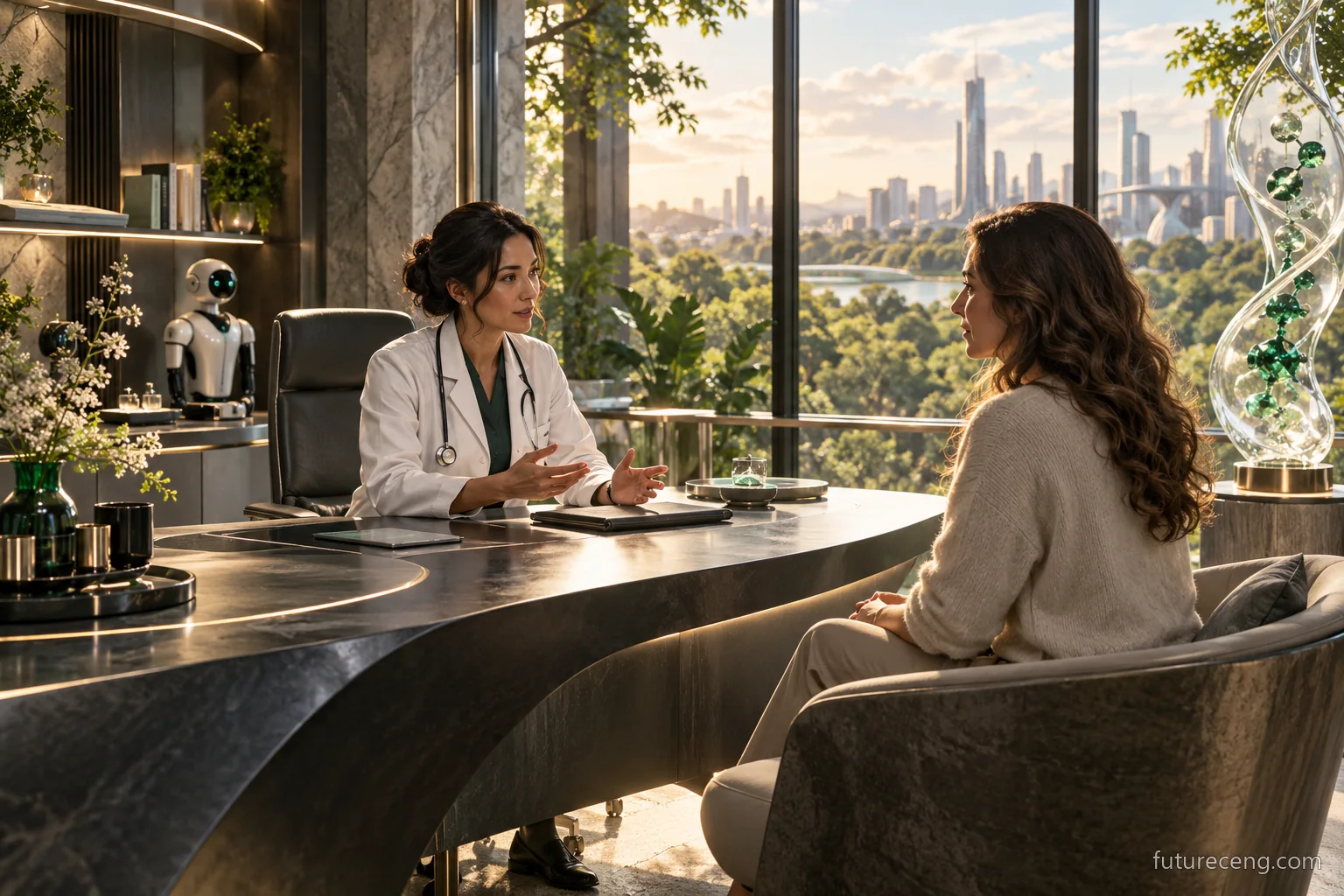 CONCEPT IMAGE
THINK ABOUT THE FUTURE DIFFERENTLY.As much as extending life, improving life.
POSSIBLE EVERYDAY SCENARIOS
Technology matters
when it touches lives.
Let’s look at the intended experience through everyday life.
A curious reader's question
A visitor explores the meaning of the title he sees about longevity. The platform can help you understand the exciting idea along with the scope of the study and its open questions. Concepts can be connected by simple explanations.
A common panel of experts
Researchers from different fields may use different terms when looking at the same goal. A regular questionnaire map can show where they can partner and where new expertise is needed. Common questions can fuel new work.
The time travel of an outcome
An idea can be traced from its initial announcement to subsequent work. The reader can see not only the first article, but also the findings and the changing commentary. The changing direction of the research can be clearly seen.
The future of the world / Man + Artificial Intelligence
Today's experience,
What's tomorrow's business?
What tasks can the experience in this work accomplish with new tools?
From collecting research information, to roles that make the meaning of evidence visible.
In the Human + Artificial Intelligence vision, some of the day-to-day work of research assistants, scientific publishers, and clinical research coordinators can be reshaped. Classifying similar records at an early stage, arranging work summaries in the same order, and repeating data checks can be more automated. But it takes human expertise to understand what the research actually shows, not to confuse different methods, and to ask experts for the missing information. With the recording discipline learned in the lab, the ability to set up a language that readers can understand can be valuable on the same platform. The new roles here can focus on creating a working environment where the research team can ask better questions and monitor how information is accessed before announcing a cure has been discovered.
It controls the source, order, and deficiencies of the research data, transferring instances where automated classification remains uncertain to the expert team. The traceable recording habits learned in the lab expand with training in data management and AI output evaluation. The day-to-day job is not just to prepare the file, but to make sure that the next researcher can understand where the record came from and to what limits it can be used.
It organizes the context in which a finding is studied and how it is addressed in subsequent studies. The automated summary detects the reduced context, consults a specialist in the field when necessary, and transfers the reader's questions to content design. The openness and resource rigor of the editorship is maintained; the skills to read research methods and visualize data feed into a new field of study.
It clarifies how different experts define the same research question, tracks updates on the files, and directs pending questions to relevant people. The ability to organize in protocol and team coordination is expanding with new research titles. The task is not to make a scientific or clinical decision alone, but to ensure that the information and responsibility for that decision remain open within the team.
Where's the new business idea? They are services for research teams that can explore data editing, evidence mapping, expert content evaluation and interdisciplinary study tools. The first discovery may be to understand what information the scientist is struggling to recover and what context the existing summaries have lost. The business model can be tested when it really facilitates this tangible work of knowledge, rather than the promise of a great life extension.
- Classification of research records at first stage
- Formatting similar work summaries
- Repeated quality checks in data files
- Biomedical AI data specialist
- The proof map editor
- Coordinator for the research of the biohydrite system
- Clinical data quality assessor
- Health research expert in human surveillance
- The scientific method and the readability of evidence
- Biomedical data management
- Research ethics and interdisciplinary communication
Research and clinical decisions require relevant scientific competence; automated summaries are used in conjunction with expert assessment.
Read this transition and other projects in AI 4.0EVIDENCE ALONGSIDE THE VISION
Around the world today
how far have we come?
Organ support and transplants are real medical fields. NYU Langone is studying genetically modified pig kidneys in clinical trials. The NIH is looking at research to slow down aging.
These studies don't prove that immortal organs can completely clean up DNA damage or completely prevent neuron death. There is no claim to immortality or guaranteed rejuvenation; the idea is a long-term research vision.
PRIMARY SOURCES · LAST CHECKED 26 OCTOBER 2026
A BIG VISION. A MEASURABLE FIRST STEP.
What could we
try first?
Develop a research platform that shows the level of evidence, phase of clinical study, and limitations of research. Identify the need for data editing for clinicians with experts.
A FEW MORE GOOD QUESTIONS
Questions worth asking.
Does this project offer immortality or rejuvenation treatment?
No, I'm not. There's no ready-made treatment or guaranteed life extension. It's a concept, a vision for the future to better understand organ support and aging research. The first concrete direction could be a research platform that makes evidence levels and open questions visible. Scientific uncertainties should be kept open.
Where does AI play a role in this vision?
Artificial intelligence can be used to organize complex research information, examine relationships, and compare questions from experts. The source and uncertainty of the summary must be apparent. The recommendation of a model should not be considered a clinically validated result or a medical decision appropriate to the individual. Expert assessment should be at the center of this flow.
Why don't you just focus on life span?
Because the human purpose of this vision is the idea of multiplying the years a person can participate in life. Movement, communication, independence and one's own preferences are equally valuable questions. When evaluating a technology, it's important to look at how those years are likely to be lived for many more years. The person's experience should be part of those questions.