MAN × ROBOT5 MINUTES OF READING
If robots work, what will humans do?
Beyond which tasks become automated: how new value is created, who has a voice and how people can take part in the transition.
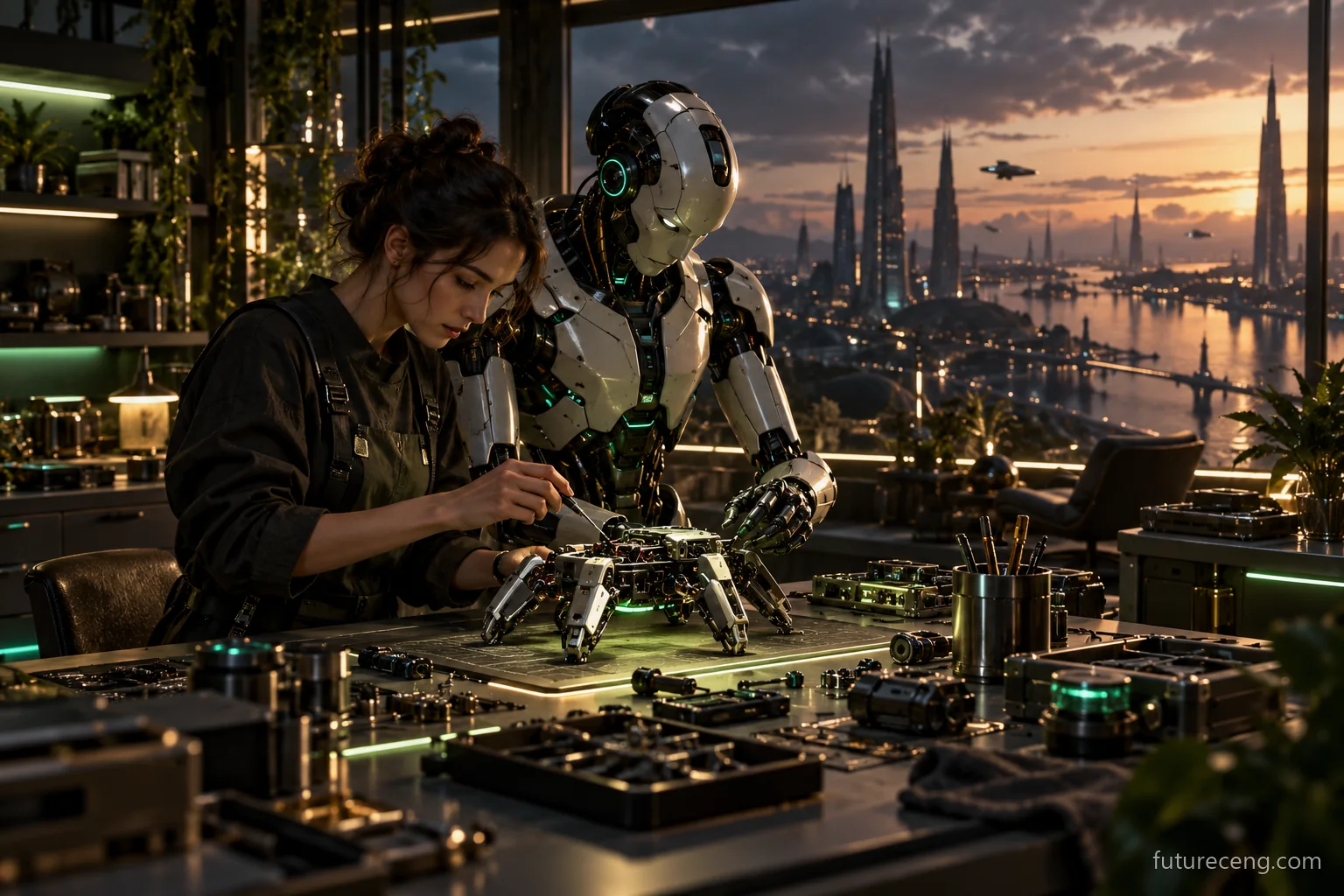
Hiring a robot is more than just buying a robot.
Imagine a robot coming to a workshop. The hand moves, grasps an object, and repeats a task. But the workshop needs more than just movement: it needs to determine where to get the piece, who to notify when an error occurs, and how to make sure the work is done correctly. When these relationships are established, the robot becomes part of a production process.
In this hypothetical scenario, the contributions of the software developer, process designer, maintenance specialist, and employee who knows the job well become apparent. The same machine needs different workflows in different environments. The work around the new technology may stem from the need for this connection to be adapted.
The job can change without changing the job title.
The ILO's 2025 assessment emphasizes that exposure to productive AI does not mean the complete disappearance of a profession. Because of the need for human input, transformation seems more likely. This framework shows that there is a lack of thinking that the change is just a job or no job.
The content of a person's job with the same title may vary: less data entry, more verification; less routine response, more uncertainty assessment. In order for this to be a good transformation, the time to learn and the decision-making power must be rethinked with the employee.
Can a skill be written once and used over and over again?
OpenJobRobotics feeds on this question. If a developer develops a task package that works well for a particular robot, can other businesses use it? Hardware compatibility, versioning information, and operating conditions should be clear as well as task definition. Solutions markets like UR+ make a part of this ecosystem visible.
The cross-brand business market encompasses more of a relationship: the developer, the robot owner, the entrepreneur and the customer. When a robot does a job, the payment goes to the owner or the service provider. It is necessary to define who has earned what and what responsibility he has assumed.
The first step is to see the whole little thing.
The first attempt doesn't have to involve all the robots. We can start with a single robot family, one clearly defined task, and a few users. Watching what happens from installation to completion can teach you more than just a broad market design. What the robot does when it encounters an inappropriate object is part of this experiment.
My understanding of the future is that humans don't wait on the edge of the process. It becomes one of the parties that defines the task, evaluates the outcome, and determines the direction of the system. It's about finding a good way to work with robots, organizing and learning like technology.
Further reading
This post is an evaluation of the future and product design. The following resources are for the current studies and research discussed.